The Cliburn Gets It Wrong—Twice
By Thomas Wolf
FOR THOSE WHO MIGHT NOT KNOW, The Cliburn is an organization that most famously sponsors an international competition for pianists ages 18–30 every four years. It also sponsors other activities, including a competition for young pianists ages 13–17 and, in the past, a competition for amateur (non-professional) pianists. As international music competitions go, it is regarded as one of the most important and prestigious in the world.
The Cliburn is named for the late international piano celebrity, Van Cliburn, who was the first American to win the Tchaikovsky competition in Moscow in 1958. The competition is based in what was Van Cliburn’s hometown of Fort Worth, Texas.
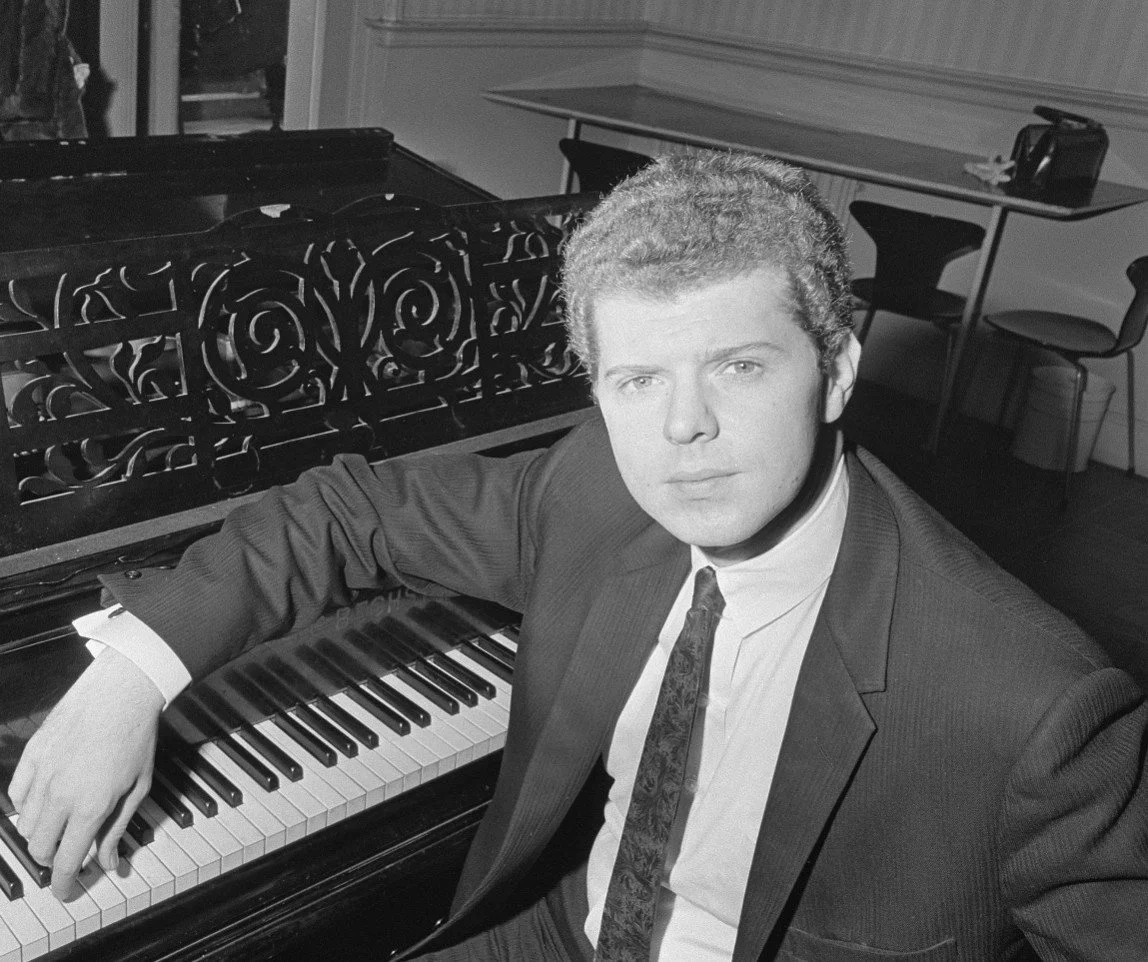
The Cliburn, an international piano competition, is named for the late Van Cliburn who was the first American to win the Tchaikovsky competition in Moscow in 1958. It is held in what was his hometown of Fort Worth, Texas. (Photo source: Anefo, CC BY-SA 3.0 NL, via Wikimedia Commons.)
There are many benefits of winning a prize at The Cliburn that go well beyond the $100,000 that the gold medal winner receives. (Silver and bronze medal winners receive $50,000 and $25,000 respectively.) Importantly, winners receive career management and concert bookings (As the artistic director of a concert series for many decades, I used to present Cliburn winners regularly, generating much pleasure and excitement for my audiences.) Winners also receive a recording contract and publicity and promotional materials, including press kits, videos, and website management. There are often additional prizes beyond the gold, silver, and bronze winners, such as the popular “Audience Award,” determined by the votes of online viewers rather than by an official jury of professionals.
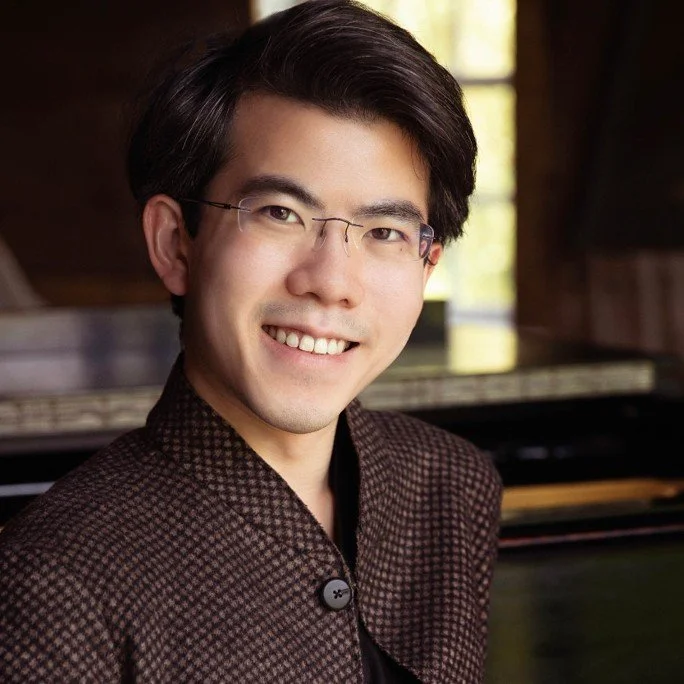
The 2025 Gold medal winner of The Cliburn was 29-year-old Aristo Sham from Hong Kong, one of 30 pianists selected to compete from 340 applicants. (Photo source: The Cliburn.)
Whatever one may think about the horse-racing nature of musical competitions (something I have written about in a previous blog), The Cliburn has added aspects to the competition process that can have a very positive impact on prize winners’ careers and also generates a large audience for serious music at the highest level. [i]
There have been two recent announcements by The Cliburn—both in my view, disheartening.
On January 22 of this year, it was announced that The Cliburn would launch a major new program: The Cliburn International Competition for Conductors. The competition will be open to conductors between 21 and 35 years of age. Taking place in June 2028 in Houston, Texas, rather than Fort Worth, the initiative will be in partnership with the Houston Symphony Orchestra and the Shepherd School of Music at Rice University. According to The Cliburn, it will be the first major international conducting competition in North America.
Also announced was that The Cliburn International Amateur Piano Competition, inaugurated in 1999 to highlight the importance of music-making in everyday life, will be retired.
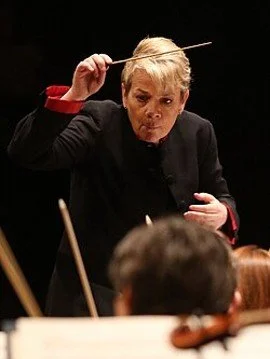
The Cliburn’s new conductor competition was in part the brain child of Marin Alsop, one of the most distinguished conductors today. She will also chair the jury. (Photo Source: Governo do Estado de São Paulo, CC BY 2.0, via Wikimedia Commons.)
The planning that went into the conductors’ competition was extensive and impressive. It was the brain child, in part, of Marin Alsop, one of the foremost American conductors, who will serve as Jury Chair. The Houston Symphony, one of America’s top orchestras, will perform with all competitors.
An esteemed Artistic Advisory Committee will consult on each round of the competition, select the required repertoire, and figure out the best ways to support young conductors. A screening jury will review online applications and video submissions and will select up to 25 applicants for a live audition in early 2028 at the Shepherd School of Music at Rice University. Twelve competitors will then be invited to compete in June 2028. All Competition Rounds will be open to the public. The grand prize winner will receive a cash award of $50,000, concert opportunities, and bolstered publicity efforts. Finalists will each receive cash awards of $20,000.
I have no objection to any of these details. They are well thought out.
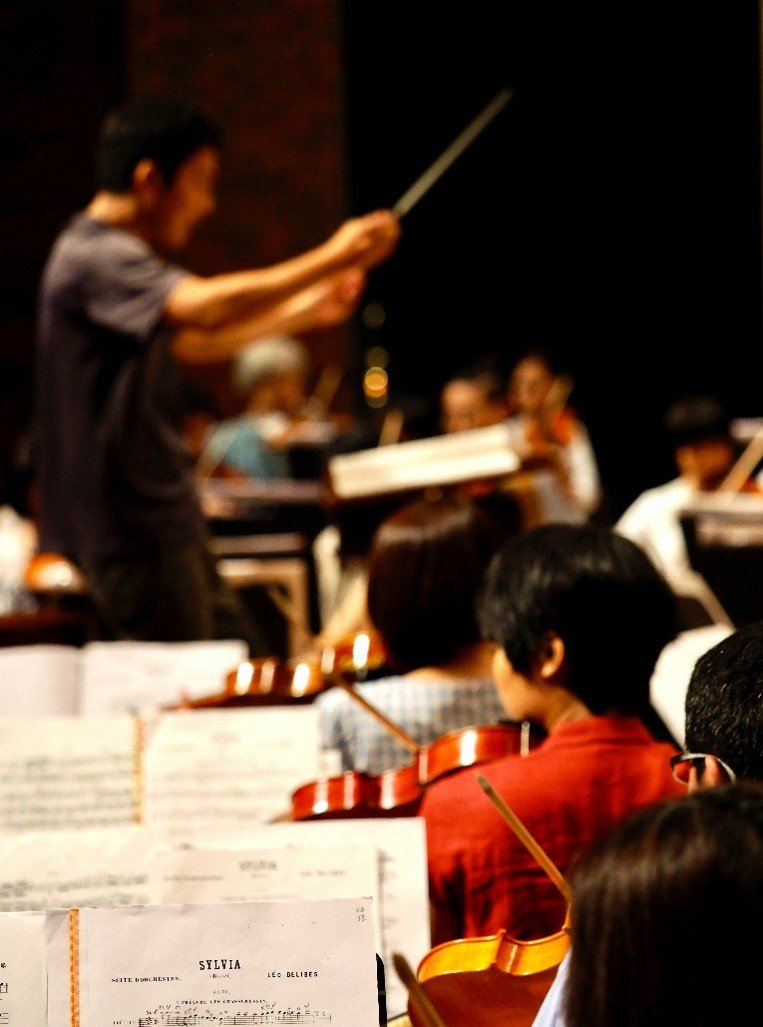
A conductor’s baton or stick technique is only a small part of the job. There are plenty of great conductors who were not physically brilliant on the podium but still could produce magnificent results. (Photo source: Kazuo ota on Unsplash.)
It is the very concept of a short, artificially constructed conductor competition that I question. A focus on how well individuals conduct a specific orchestra with specific repertoire at a given moment in time makes little sense to me when I think about what makes a great conductor and how one judges such greatness. Contrast this with an instrumental competition of pianists using similar criteria. In such a competition, a single musician will demonstrate his or her skills both technically and musically in most cases without other individuals involved (a concerto and chamber music being the exceptions). Those skills can be isolated and judged. But a conductor does not play an instrument and depends on scores of other people to make music. The skills of stick technique or score memorization are such a small part of what matters (indeed some very fine conductors have mediocre stick technique [ii]). Everything else is difficult to judge in a short, artificially constructed event like a competition.
Rather, it is the ability of an individual to coax a musical concept from dozens of musicians who may have their own insights and opinions about how things should go. Sometimes the chemistry between a conductor and an orchestra is great. Sometimes it is not but can be developed over time. Indeed, the phrase “over time” is key. Great conductors will gradually establish a rapport with players and gain a reputation for getting terrific results.
There is also the question of repertoire. Some of the greatest conductors were terrific at conducting pieces from certain periods, but not so great at other works. According to the model proposed by The Cliburn, people will be rewarded for being great at many different kinds and styles of music. More importantly, what is the conductor’s philosophy about programming? In an age when audiences are aging, dying, and declining, how will the conductor usher in a new generation of ticket buyers with repertoire choice? What about new work and commissioning?
Then there is the way a conductor relates and communicates with an orchestra—something that cannot be determined through a short-term competition. As a musician in one of America’s great orchestras said to me recently, “The last thing I would look for in choosing a conductor is whether they had won a competition.”
Today a conductor’s job is often so much more than what happens on the podium, especially if he or she serves as a music director, which will probably be the aspiration of many who will be competing in Houston. How well does the individual handle personnel management and personnel selection (including the fact that selection of orchestra members often involves a delicate dance with existing symphony players). As well, there is the social, community, and educational aspects of the job—something the board of the Boston Symphony Orchestra recently appeared to believe its Music Director lacked. Though he was considered by the majority of players to be, musically speaking, one of the great conductors of his generation, his contract was not renewed.
The proper way to establish a conductor’s prize is to model it on the Gilmore Piano Award—something for which it is not possible to apply. Presented every four years to a classical pianist of any age or nationality, the Gilmore Artist Award provides $300,000 to support the artist’s creative and professional development. Often described as music’s answer to the MacArthur “genius grants,” the award is non-competitive (in the traditional sense) and the process is confidential. Pianists are recommended by the Classical Awards Nominating Committee, a diverse group of international music professionals. Final decisions are made by an anonymous Classical Awards Advisory Committee, which evaluates nominees over time by observing multiple performances in varying conditions. It is a brilliant approach to identifying and rewarding talent. However, unlike The Cliburn’s new conductors’ competition, The Gilmore has no need to be very public and add glitz and prestige to its organization.
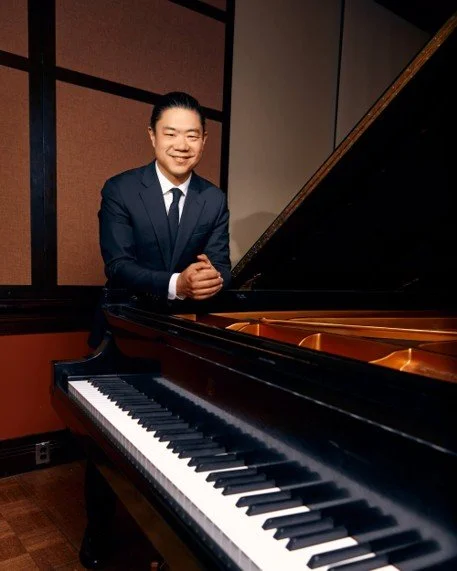
Jon Lee, winner of the 2022 Cliburn International Amateur Piano Competition, a 41-year-old software engineer. A graduate of MIT in Computer Science, he is a former engineering manager at Apple. (Photo source: Minks Media.)
The second announcement by The Cliburn—that it will retire its International Amateur Piano Competition, inaugurated in 1999 to highlight the importance of music-making in everyday life—is even more dispiriting.
If there is anything that contributes to the vitality of audiences, it is a vibrant population of amateur players. Indeed, audience research [iii] indicates conclusively the strong correlation between playing an instrument or singing in a choir and attendance at live musical events. Adult amateurs—many well off economically—also form part of the backbone of donors to classical music organizations. In an age when classical music audiences are aging and declining and when organizations search for donors, anything that encourages and highlights amateur participation in music should be applauded. As The Cliburn web site stated, its amateur competition was “the first event of its kind in the United States,” a brilliant idea that, in my view, should have been continued and even expanded.
The website goes on to state, somewhat incredibly, that “the program has largely accomplished its mission of growing a thriving community of non-professional pianists.” The tradition of non-professional pianists (and instrumentalists of all kinds) goes back to Mozart’s time and even earlier and it was far more vibrant then than it is today. Anything to encourage amateur pianists will redound to the benefit of classical music. Let us hope that some other organization—less short-sighted—will pick up where The Cliburn left off.
[i] The best book about piano competitions in general and The Cliburn in particular is still Joseph Horowitz’s The Ivory Trade: Music and the Business of Music at the Van Cliburn International Piano Competition, New York: Summit Books, 1990.
[ii] Some conductors do not use a baton. Yet musicians can still easily judge the quality of the physical aspects of a conductor’s use of arms, hands, and body in leading the orchestra.
[iii] See Classical Music Consumer Segmentation Study: How Americans Relate to Classical Music and their Local Orchestras, John S, and James L. Knight Foundation, 2002.